
Introduction
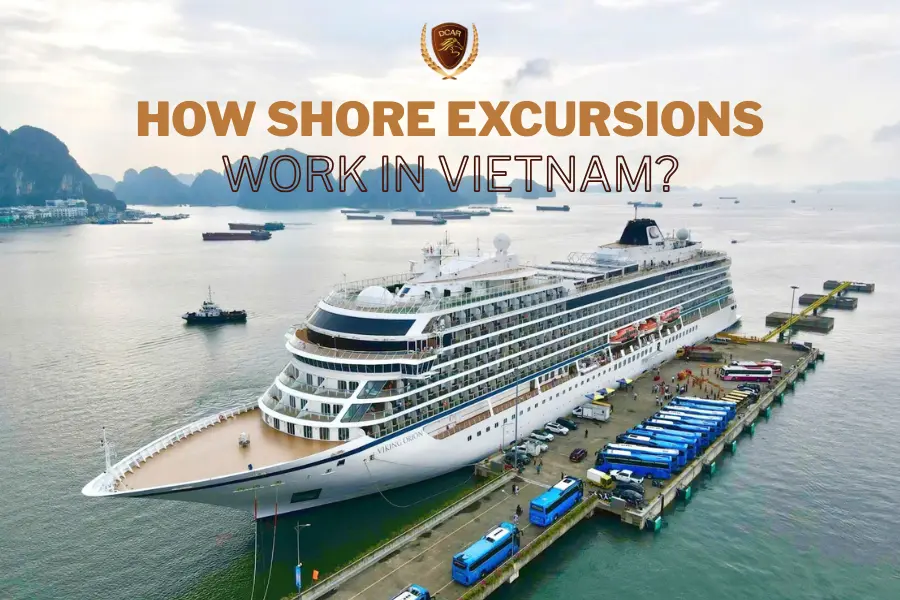
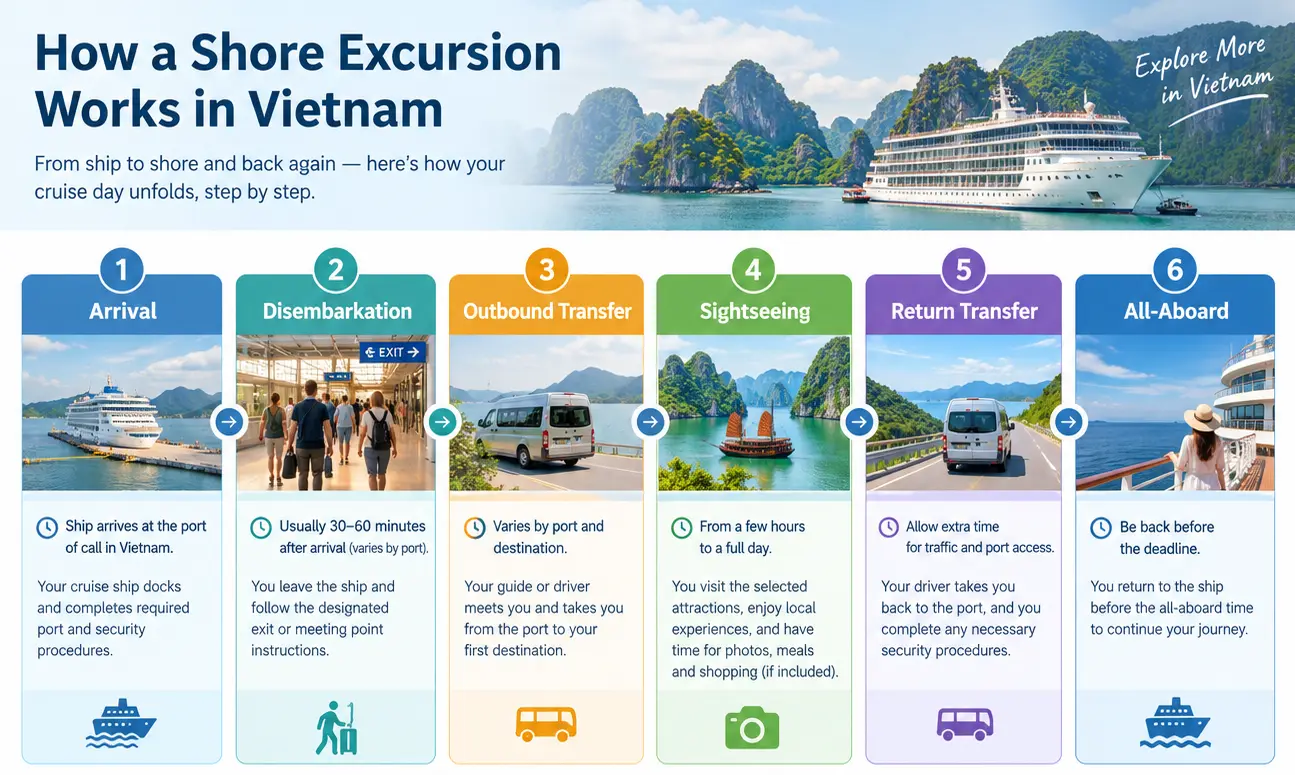
How shore excursions work in Vietnam is quite simple once you understand the sequence: your cruise ship arrives at a port of call, you disembark after the ship and port procedures are completed, meet your guide or driver, spend the available time exploring, and return to the port before your cruise ship’s all-aboard deadline.
The important part is that the experience varies considerably between Vietnamese ports. A port may be close to the attractions you want to see, or it may require a long road transfer before your sightseeing even begins.
For first-time cruisers, understanding this process is more important than choosing a long list of attractions. Vietnam cruise shore excursions work around a fixed ship schedule, port access conditions, traffic, and the time required to return through the port. Once you understand those practical details, it becomes much easier to decide between a cruise-line excursion, a private tour, a small-group tour, or independent exploration.
What Is a Shore Excursion?
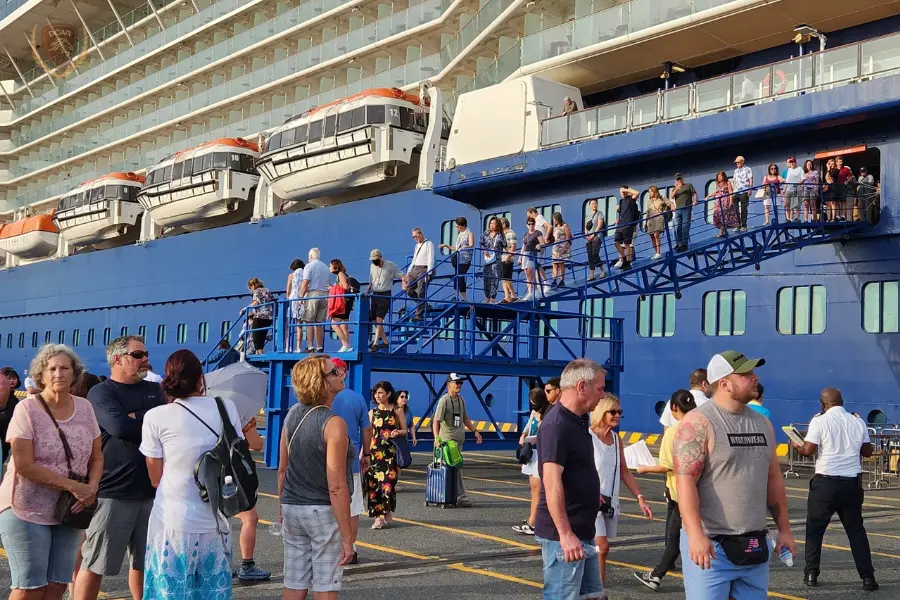
A shore excursion is a land-based sightseeing experience arranged for passengers during a cruise ship’s scheduled stop at a port. Instead of remaining onboard for the entire port call, passengers disembark and spend part of the day visiting nearby cities, historical sites, cultural attractions, beaches, restaurants, or natural landscapes.
So, how does a shore excursion work in Vietnam? The basic structure is usually:
- Your cruise ship arrives at a Vietnamese port.
- Passengers are allowed to disembark after the required procedures.
- You leave the terminal, berth area, or designated port access point.
- Your guide, driver, or tour group meets you according to the agreed arrangement.
- You visit the selected destinations.
- Your transportation takes you back toward the port.
- You complete the necessary port and security procedures.
- You return to the ship before the required all-aboard time.
The excursion itself may last several hours, but the usable sightseeing time is shorter than the ship’s entire time in port. That distinction is one of the most important things to understand when planning shore excursions in Vietnam.
How Do Cruise Shore Excursions Work in Vietnam?
For most passengers, how shore excursions work in Vietnam becomes clearer when you think of a cruise day as a timetable rather than an ordinary day tour. Your ship’s arrival and departure times provide the outer limits, but they do not represent your actual sightseeing window.
There can be time between the ship’s arrival and your ability to leave the ship. You may also need time to move through the port, meet your driver, and begin the road journey to your destination. At the end of the day, you need additional time to return to the port and complete boarding procedures.
For this reason, a sensible Vietnam cruise excursion is planned backward from the ship’s all-aboard requirement, rather than forward from the scheduled docking time.
The exact process also depends on the port. Chan May, for example, serves as a gateway to several destinations in Central Vietnam. The official port reported that one January 2026 cruise call carried 2,680 passengers, with nearly 1,000 passengers purchasing shore excursions to Hue and Da Nang.
What Happens When a Cruise Ship Arrives in Vietnam?
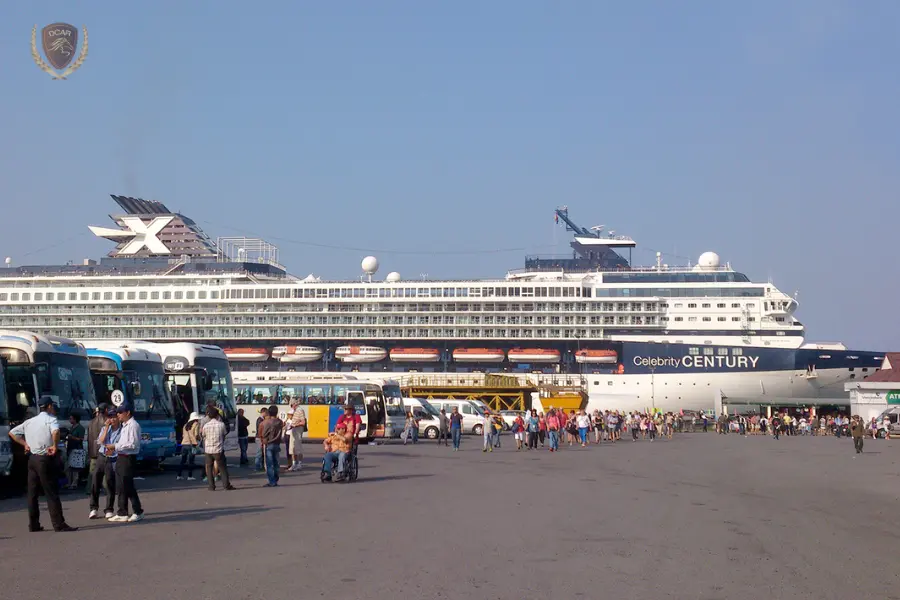
When a cruise ship reaches a Vietnamese port, passengers do not necessarily walk directly from their cabin to a waiting tour vehicle. The practical process depends on the ship, port, berth, security arrangements, and whether the vessel is docked or requires another type of passenger transfer.
Your cruise line will normally provide instructions about when passengers can disembark. Follow those instructions rather than assuming that the published arrival time means you can immediately begin your tour.
Once ashore, you need to know your exact cruise port meeting point. Depending on the port and your tour arrangement, your guide or driver may meet you at an authorized pickup location rather than directly beside the ship.
This is especially important at large or operationally complex ports. Some Vietnamese cruise ports also handle substantial cargo activity, so the distance between a ship, a passenger access point, and the public road is not always obvious to a first-time visitor.
Before your cruise, confirm:
- Ship name and cruise date
- Exact port of call
- Scheduled arrival time
- All-aboard time
- Meeting point
- Driver or guide contact
- Port access instructions
- Estimated return time
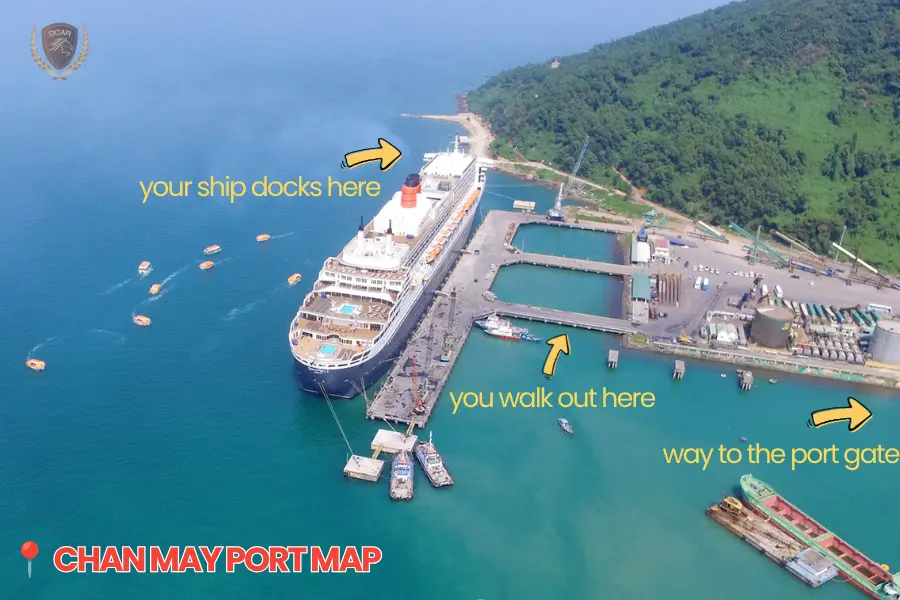
How Do You Get From the Cruise Ship to the Port Gate?
One common misunderstanding about Vietnam cruise excursions is assuming that every port operates like a compact passenger terminal where taxis and tour vehicles are immediately outside the ship.
The actual arrangement varies. A cruise passenger may need to walk from the ship to a designated exit, use port transportation, or follow instructions from the cruise line or local operator. At some industrial ports, walking conditions can be less convenient than expected.
This is why cruise port pickup Vietnam arrangements should be confirmed in advance. Ask exactly where your guide or driver will meet you and whether the vehicle is authorized to access the relevant area.
Do not simply tell a driver to “pick me up at the port.” A useful booking confirmation should identify the port, ship, date, passenger name, meeting location, and a reliable contact method.
The same principle applies to cruise terminal pickup Vietnam arrangements. Your meeting point should be based on the actual operation of your cruise call rather than a generic map pin.
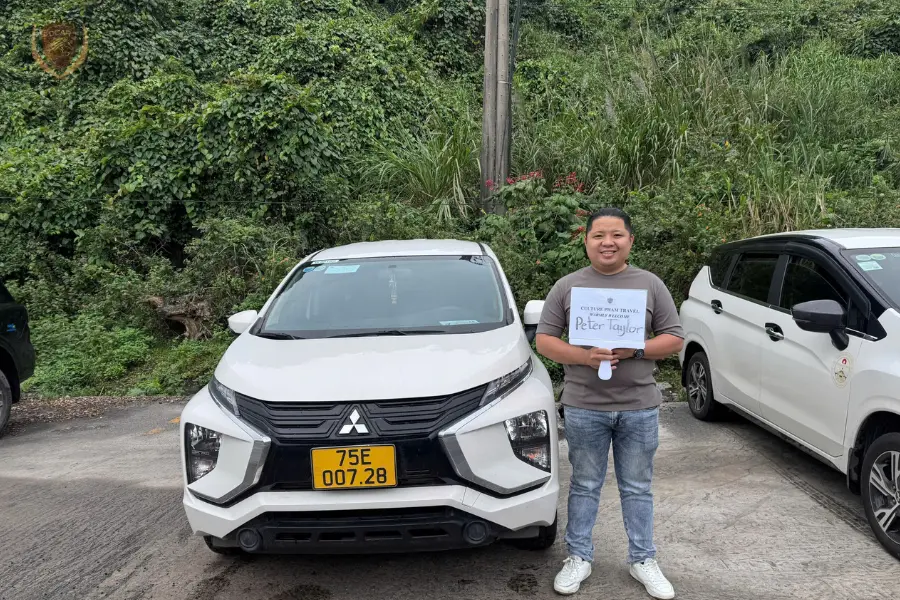
How Long Do Shore Excursions Take?
There is no single standard duration for Vietnam cruise excursions. The available time depends on your ship’s schedule and the destination you choose.
A short port call may only allow a compact local itinerary. A longer call can make a full-day excursion possible, but road travel can still consume a substantial portion of the day.
Consider this simple planning formula:
| Part of the day | What it includes |
| Ship arrival | Scheduled port arrival |
| Disembarkation | Waiting and leaving the vessel |
| Port exit | Walking, transport, security, and meeting your tour |
| Outbound transfer | Travel from the port to your destination |
| Sightseeing | Your actual attractions and activities |
| Return transfer | Travel back toward the port |
| Port re-entry | Security and boarding procedures |
| Ship departure | Your final deadline |
This is why how shore excursions work in Vietnam cannot be reduced to a simple “six-hour tour” description. A six-hour excursion may include transportation, while your actual sightseeing time may be considerably less.
Cruise Line Shore Excursions vs Private Tours
There are several ways to arrange a shore day in Vietnam. The two most common are booking through the cruise line or arranging an independent tour with a local operator.
A cruise-line excursion is normally integrated into the cruise company’s shore-excursion program. This can make the booking process straightforward, particularly for passengers who prefer one provider to coordinate the port day.
An independent private excursion gives you more control over the itinerary. You can usually discuss the route, vehicle, guide, sightseeing priorities, meal stops, and timing before the trip.
Neither format automatically suits every passenger. The important comparison is how each option fits your priorities, group size, budget, mobility needs, and tolerance for planning.
How to Book a Vietnam Shore Excursion Independently
If you decide to book Vietnam cruise excursions independently, provide the operator with more information than you would for an ordinary city tour.
At minimum, give them:
- Cruise ship name
- Cruise date
- Port of call
- Scheduled arrival
- Scheduled departure
- All-aboard time if available
- Number of travelers
- Children’s ages
- Preferred destinations
- Mobility considerations
- Guide-language requirements
The operator can then determine whether your preferred itinerary fits the available port window.
For a private tour from a Vietnam cruise port, ask specifically about the pickup point and return plan. A reputable operator should be able to explain how the excursion is structured around your ship rather than simply selling you a standard day tour.
This is particularly important for longer routes such as a Phu My Port to Ho Chi Minh City excursion or a Central Vietnam trip from Chan May. The driving time can become a major part of the day.
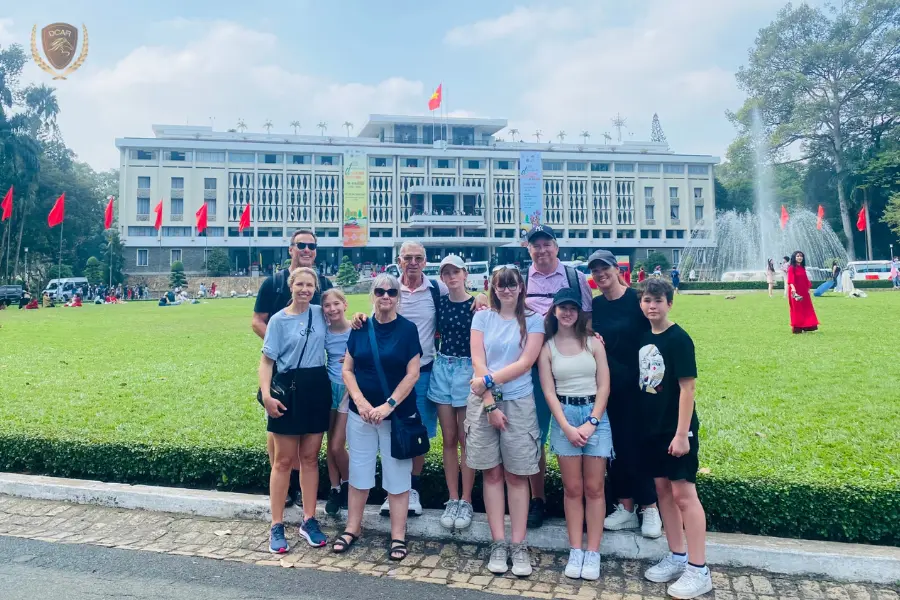
How Do You Choose Between Cruise Ports and Destinations?
A major part of how shore excursions work in Vietnam is understanding that the city named on your cruise itinerary may not be the exact place where the ship docks.
The practical distance between port and destination can change the character of your shore day. Phu My is a useful example because it functions as a gateway for excursions toward Ho Chi Minh City. Chan May is another example because it provides access to Hue, Da Nang, Hoi An, and other Central Vietnamese destinations.
Before selecting a tour, identify the actual port first. Then compare:
Port → destination → travel time → sightseeing time → return journey → port deadline
Vietnam’s Main Cruise Ports and Shore Excursions
The best way to understand how shore excursions work in Vietnam is to look at the major cruise gateways individually. They are not interchangeable, and a route that works comfortably from one port may be impractical from another.
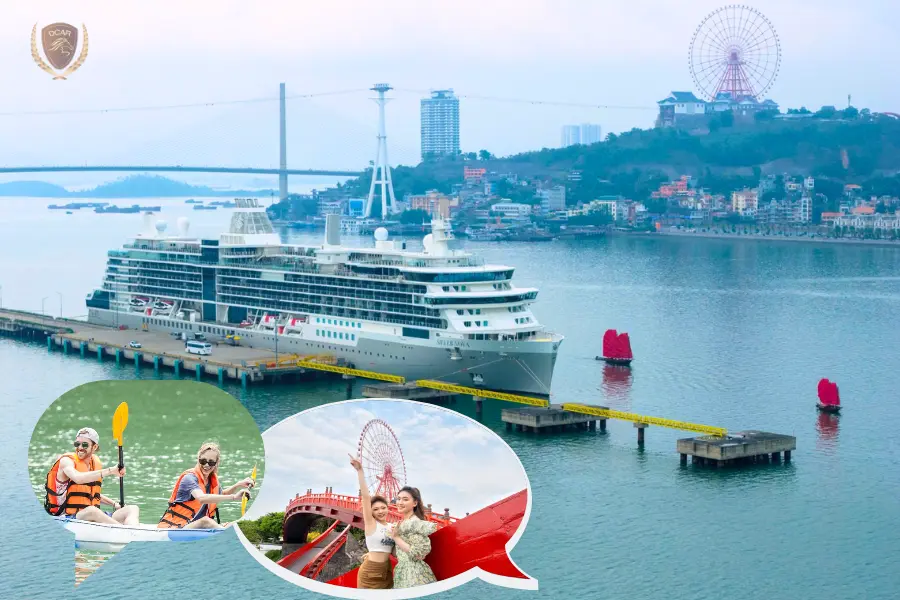
Halong International Cruise Port
Halong is unusual because the cruise port is closely associated with one of Vietnam’s most famous visitor destinations. Halong Bay shore excursions can focus on the bay itself, local attractions, or other destinations depending on the ship’s schedule.
For passengers interested primarily in the bay, the main planning question is how to use the available port time without creating an unnecessarily complicated itinerary. Halong International Cruise Port is therefore an important reference point when deciding where your excursion actually begins.
If your plan involves going farther inland, such as a Halong cruise port to Hanoi journey, the road distance becomes much more significant. A short port call may not provide enough practical time for an ambitious round trip.
Chan May Port
Chan May is one of the clearest examples of why port location matters. It sits between major Central Vietnamese destinations and serves as an access point for excursions toward Hue, Da Nang, and Hoi An.
The official Chan May Port site describes its location between Hue and Da Nang, while its published vessel information shows cruise calls with different arrival and departure windows.
That means Chan May shore excursions should be planned around the individual ship call rather than a generic schedule. A Hue-focused itinerary, for example, has different road requirements from a Hoi An excursion.
For detailed planning, see our Chan May Port guide.
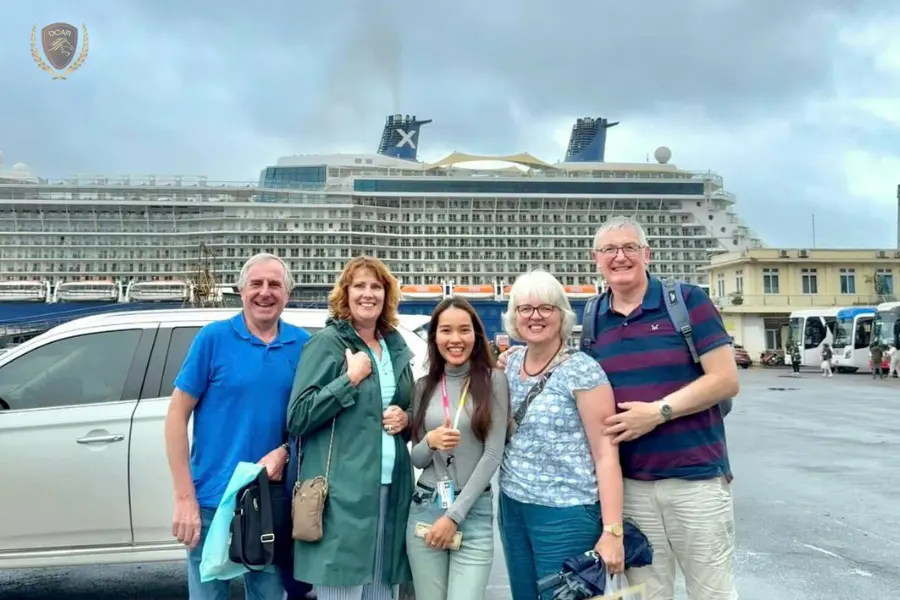
Tien Sa Port and Da Nang
Tien Sa is associated directly with Da Nang, making the relationship between port and city different from the situation at Chan May. Tien Sa Port shore excursions can include Da Nang attractions, Marble Mountains, Hoi An, and other Central Vietnam experiences depending on the available time.
A Tien Sa Port to Hoi An route can work as a focused excursion, but passengers should still allow time for traffic and the return journey. Avoid treating the scheduled ship departure as the moment you should arrive at the port.
The most useful question is not simply “How many attractions can I visit?” It is “How many attractions can I visit while maintaining a realistic return plan?”
Read the Tien Sa Port guide for more detailed port-day planning.
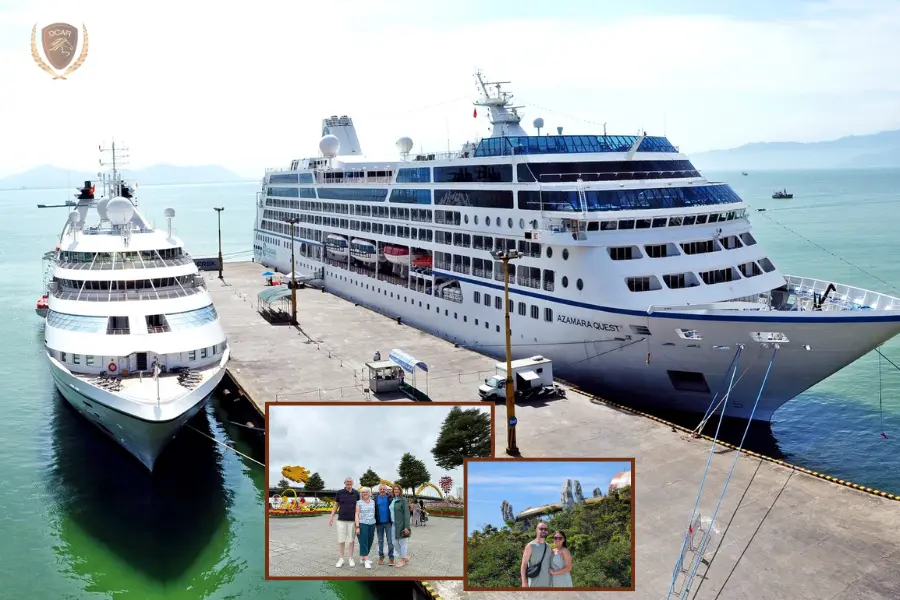
Nha Trang and Cam Ranh
Nha Trang requires particular attention to the actual cruise arrival location. Current 2026 cruise-tourism information identifies Cam Ranh as an important cruise gateway for passengers visiting the Nha Trang region, with some cruise calls using Cam Ranh rather than docking directly in central Nha Trang.
That distinction matters because Nha Trang shore excursions are not planned in exactly the same way as a city-center pickup. If your cruise itinerary refers to Nha Trang, confirm the actual port or tender location before booking transportation.
A Cam Ranh Port to Nha Trang itinerary therefore needs to account for the transfer between the cruise arrival point and the city.
For the port-specific details, see the Nha Trang Port guide.

Phu My Port
Phu My is another important example of port-versus-city planning. Passengers may want to visit Ho Chi Minh City, the Cu Chi Tunnels, or other southern destinations, but the cruise port itself is not simply another downtown sightseeing location.
A Phu My shore excursion should therefore begin with the available port time and transfer requirements. If your main objective is Ho Chi Minh City, compare the amount of time spent traveling with the time available for sightseeing.
For longer excursions, build the return journey into the itinerary from the beginning rather than leaving it until the final attraction.
Our Phu My Port guide provides a more detailed framework for understanding this cruise gateway.
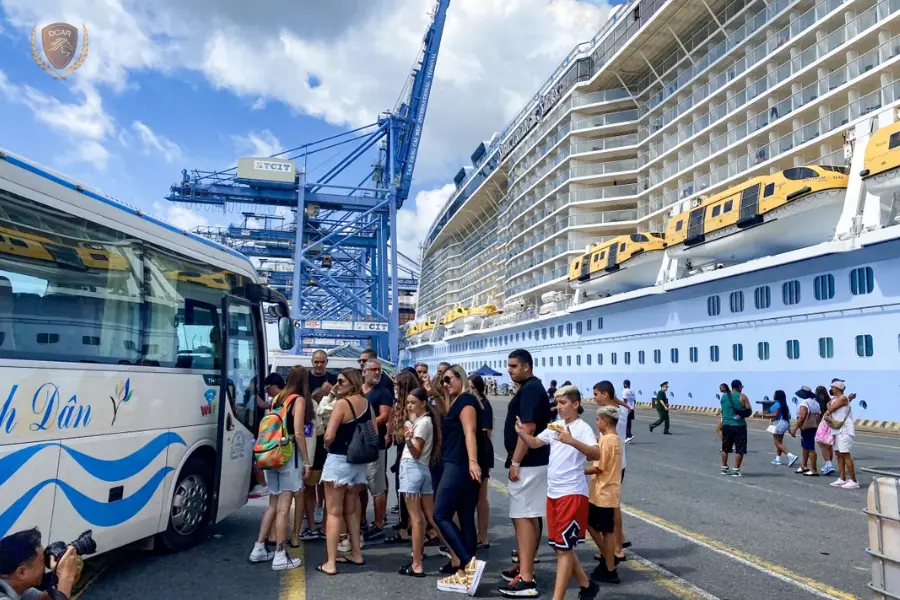
What Should You Check Before Booking a Shore Excursion?
The most useful pre-booking checklist is short. You do not need to research dozens of variables, but you should confirm the ones that can materially affect your port day.
1️⃣ Your cruise details
Check the actual port, arrival time, departure time, and all-aboard instructions provided by the cruise line.
2️⃣ Your excursion details
Confirm the pickup point, tour duration, vehicle, guide, inclusions, entrance fees, meals, and cancellation terms.
3️⃣ Your return plan
Ask when the vehicle is expected to return to the port and how much contingency time has been built into the schedule.
4️⃣ Your physical requirements
Consider walking distances, stairs, heat, humidity, uneven surfaces, and the amount of time spent in the vehicle.
This is especially useful for Vietnam shore excursions for first-time cruisers, families, seniors, and travelers who want a slower pace. A shorter itinerary with fewer attractions can sometimes make more sense than trying to fit every famous sight into one port call.
What Happens If a Shore Excursion Is Late?
One of the most important questions about how shore excursions work in Vietnam concerns delays.
Traffic, weather, road conditions, port procedures, unexpected queues, or a late start can affect an itinerary. A private operator can adjust the route, but no tour provider can control every external factor.
The safest approach is to build a meaningful return buffer rather than planning to arrive at the port immediately before the ship’s deadline.
Passengers should also distinguish between a cruise-line excursion and an independent excursion when considering delay procedures. The exact arrangements and responsibilities depend on the cruise line, tour provider, and circumstances.
Never assume that an independent tour automatically has the same arrangements as an excursion purchased from your cruise line. Ask the operator what their contingency plan is and who you should contact if the schedule changes.
How Early Should You Return to the Cruise Ship?
There is no universal number of minutes that applies to every ship and every Vietnamese port. Your cruise line’s instructions and all-aboard time should take priority.
When planning how shore excursions work in Vietnam, think in terms of return buffer, not simply arrival time.
Your planned return should allow for:
- Traffic delays
- Road incidents
- Weather
- Port access
- Security procedures
- Walking or internal port transportation
- Unexpected queues
- Changes to the ship’s operational schedule
This is particularly important when your excursion involves a long road transfer. The farther your destination is from the port, the more carefully the return journey needs to be planned.
How Much Do Vietnam Shore Excursions Cost?
There is no single standard Vietnam cruise excursion cost because the price depends on the itinerary and how the excursion is organized.
The main factors usually include:
| Cost factor | Why it matters |
| Group size | Private vehicles spread the transport cost differently |
| Vehicle | Sedan, SUV, van, or larger vehicle affects capacity |
| Guide | A private guide adds a separate service component |
| Duration | Longer excursions require more operating time |
| Distance | Longer port transfers increase transport requirements |
| Entrance tickets | Some attractions require admission |
| Meals | Lunch or other meals may be included |
| Port arrangements | Certain port calls can involve additional logistics |
When comparing Vietnam shore excursion prices, compare the total inclusions, not just the headline figure. A lower initial price may exclude entrance fees, meals, guide services, or other items that you would otherwise need to pay separately.
A Simple Way to Plan Your Vietnam Cruise Day
If this is your first cruise visit to Vietnam, use this sequence:
- Confirm the actual port. Do not rely only on the destination name shown in a general cruise itinerary.
- Check the ship’s schedule. Identify arrival, disembarkation instructions, and all-aboard time.
- Measure the transfer. Look at the realistic road journey between the port and your intended destination.
- Choose your excursion format. Compare cruise-line, private, small-group, and self-guided options.
- Keep the itinerary focused. Choose a sensible number of attractions rather than maximizing the number of stops.
- Confirm the meeting point. Know exactly where your guide or driver will meet you.
- Plan the return first. Work backward from the ship’s all-aboard requirement.
This approach captures the practical reality of how shore excursions work in Vietnam without treating every cruise port as if it followed the same rules.
FAQ
Can I explore Vietnam independently from a cruise port?
Yes, independent exploration is possible at some ports, but the practical difficulty varies. Consider the distance from the port, local transportation, traffic, port access, and the time required to return to the ship.
Are private shore excursions suitable for families?
They can be useful when a family wants more control over the pace, stops, vehicle, and schedule. Families should still choose an itinerary that fits the available port time rather than trying to reproduce a full multi-day Vietnam itinerary in one day.
Are Vietnam cruise excursions suitable for seniors?
They can be, provided the itinerary matches the traveler’s mobility and walking ability. Ask about stairs, walking distances, vehicle access, heat, and the amount of time spent standing or touring outdoors before booking.
Can I take a taxi from a Vietnam cruise port?
Availability and access vary by port. A taxi or local transport option should not be assumed to be immediately available beside every cruise ship. Confirm the actual port exit and transportation arrangements before relying on a taxi.
Should I choose one destination or several?
That depends on the port and your available time. A short port call generally benefits from a focused route, while a longer call may allow two nearby highlights. Long transfers make excessive sightseeing stops less practical.
How do I know whether a tour fits my cruise schedule?
Give the operator your exact ship name, cruise date, port, arrival time, and all-aboard time. A responsible itinerary should be built around those details rather than a generic full-day tour schedule.
Final Takeaway
Understanding how shore excursions work in Vietnam makes cruise travel much easier because it changes the way you plan your day. You are not simply booking a sightseeing tour. You are fitting transportation, sightseeing, port procedures, and a fixed ship schedule into one carefully managed window.
The most important habit is to confirm the actual cruise port before choosing your destination. Then calculate the available time, account for the outbound and return transfers, confirm the meeting point, and leave a sensible buffer before all-aboard time.
Vietnam offers very different cruise experiences: Halong can center on the bay itself. Chan May opens routes toward Hue, Da Nang, and Hoi An. Tien Sa provides access to Da Nang and Central Vietnam. The Nha Trang region may involve a Cam Ranh arrival. And Phu My functions as a gateway to southern destinations. Current 2026 port information confirms that these cruise calls can have significantly different operating windows, so itinerary planning needs to be port-specific.
Once you understand the process, how shore excursions work in Vietnam becomes less about fitting in as much as possible and more about choosing an itinerary that gives you a worthwhile day ashore while keeping your return to the ship realistic.
Thanks for reading this travel blog. Our Vietnam Limousine team wishes you the best shore excursions in Vietnam.