
Introduction
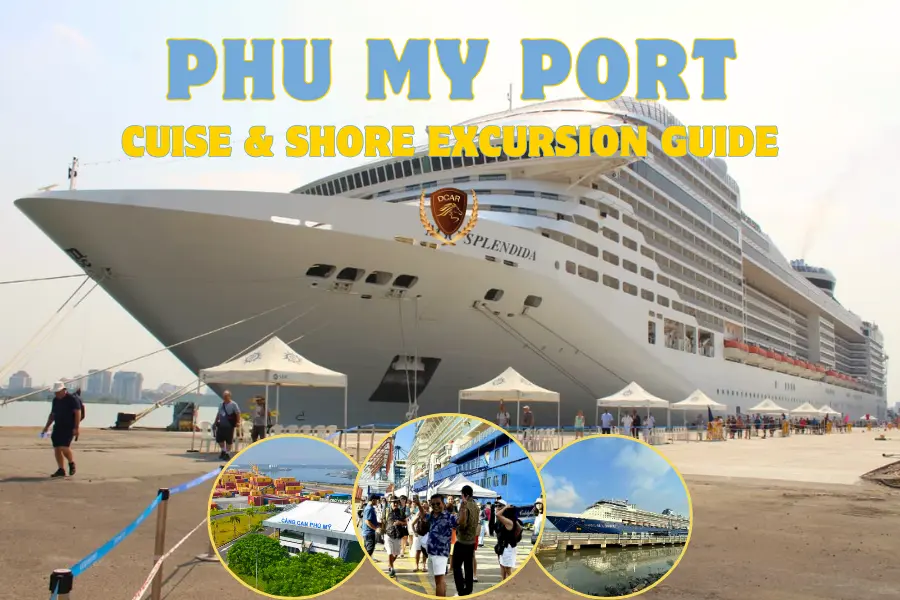
A Phu My Port guide is most useful when it answers one critical question right away: how do you experience the best of southern Vietnam after your ship docks without putting your return journey at risk?
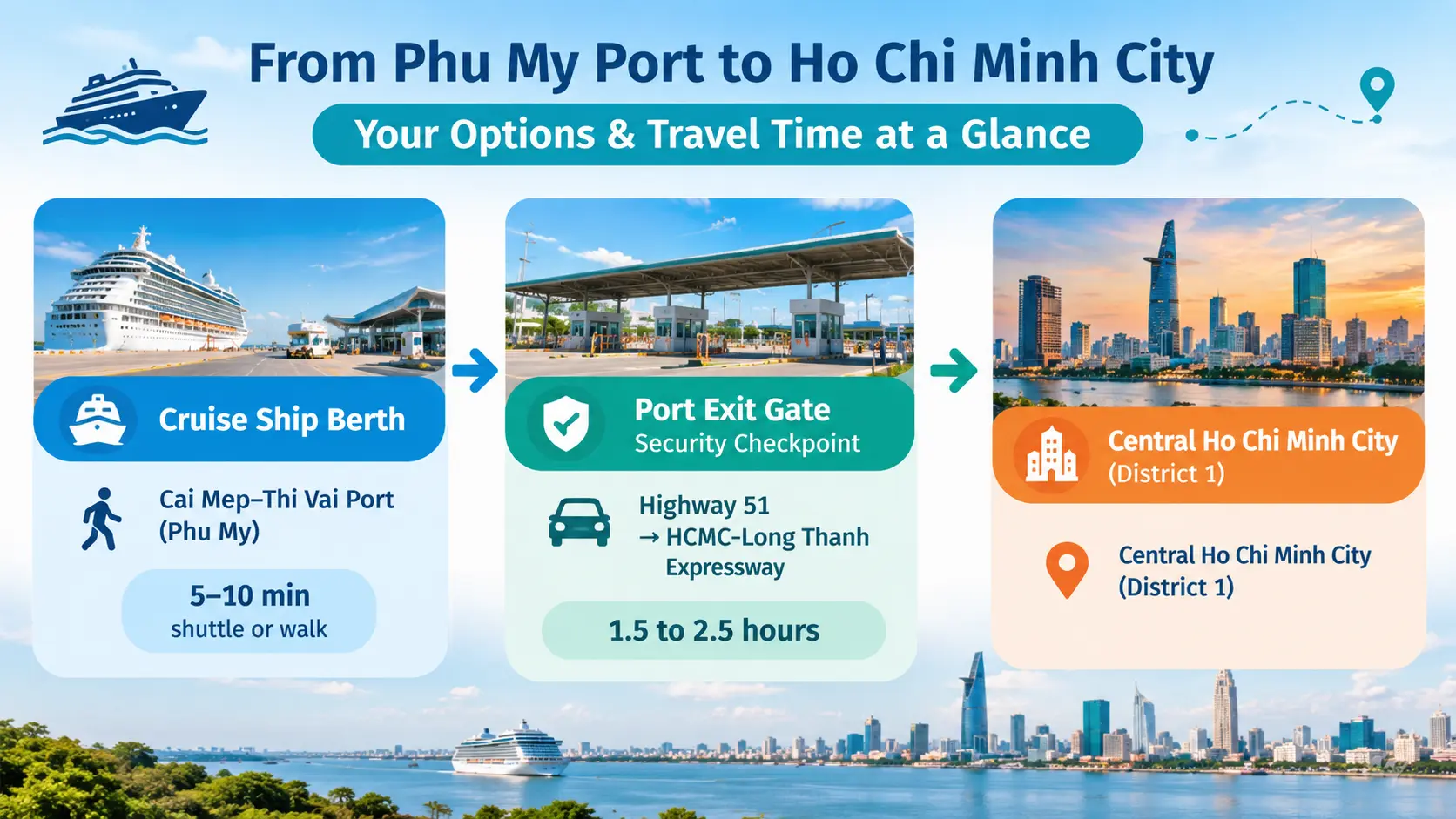
While cruise itineraries often list this call as “Ho Chi Minh City (Phu My),” your ship actually berths in the industrial Cai Mep–Thi Vai container terminal complex. That puts you roughly 60 to 70 kilometers outside central Saigon, making transportation, highway timing, and road buffers the central focus of your day.
Whether you choose to travel into downtown Ho Chi Minh City or explore the nearby coastal city of Vung Tau, understanding how this industrial gateway operates is the secret to a seamless, stress-free shore excursion.
What is Phu My Port? An Overview
To understand your arrival, it helps to know how Phu My operates.
Primary Function & History
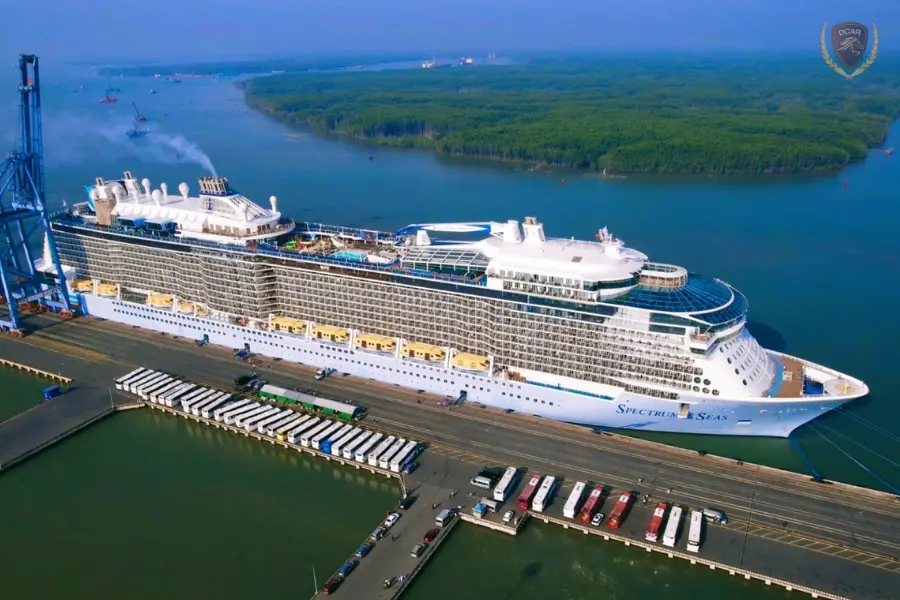
Developed in the late 1990s and expanded significantly over the last two decades, Phu My is first and foremost a commercial industrial hub. It forms a crucial pillar of the Cai Mep–Thi Vai deep-water port system, handling heavy container ships, dry bulk cargo, and international maritime trade for southern Vietnam.
Because it is one of the few deep-water channels in southern Vietnam capable of handling massive mega-cruise ships (up to 80,000+ DWT with deep draft capacity), cruise lines also utilize commercial piers here to give passengers access to Ho Chi Minh City and Vung Tau.
Port Infrastructure & Passenger Facilities
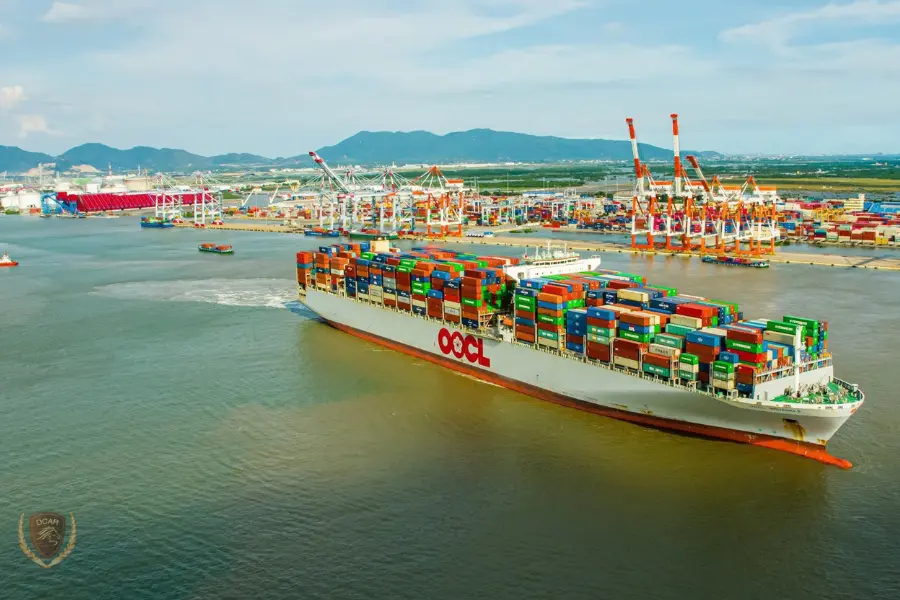
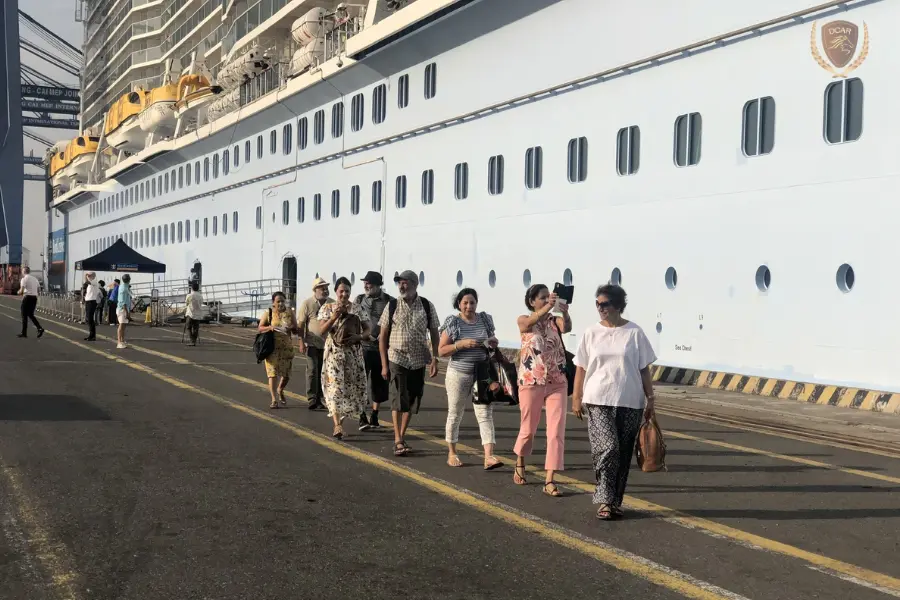
The port complex spans several specialized terminals, including SP-PSA, PTSC Phu My, and TCIT. It’s equipped with heavy gantry cranes, container yards, and security checkpoints. Walking through the operational area is strictly prohibited for safety reasons. That’s why ships provide internal shuttles or organized transport directly from the gangway.
Moreover, because Phu My is an active working cargo terminal rather than a dedicated cruise hub, it lacks traditional passenger terminal facilities. You will not find air-conditioned waiting lounges, duty-free shops, tourist information desks, or currency exchange counters at the pier.
Where is Phu My Port?
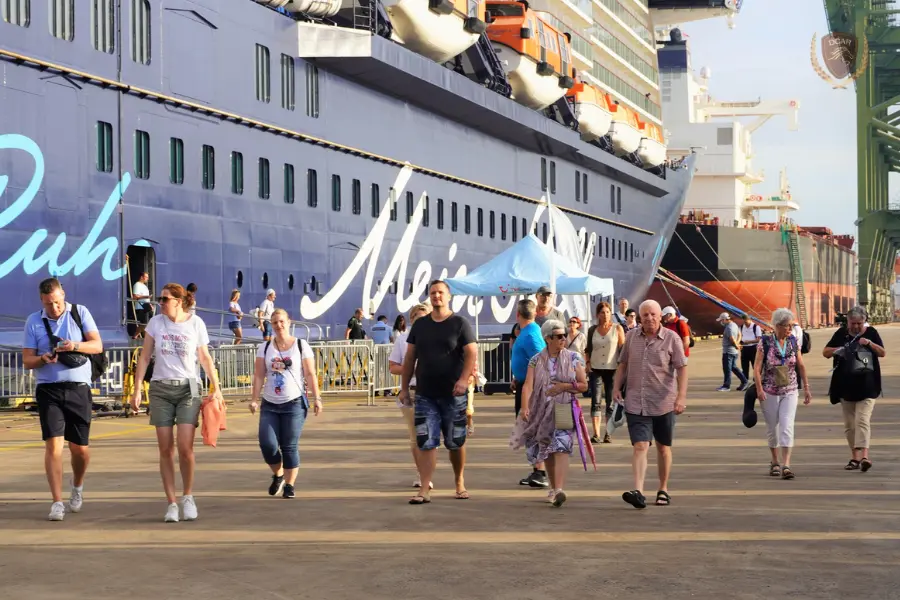
Phu My Port is located in the Phu My town area of Ba Ria–Vung Tau Province along the Cai Mep–Thi Vai River, roughly 60 to 70 kilometers (37–43 miles) southeast of central Ho Chi Minh City.
It serves as the main deep-water cargo and passenger gateway for southern Vietnam. While cruise lines frequently label this stop as “Ho Chi Minh City (Phu My),” your ship berths in an industrial zone rather than downtown Saigon.
Can you walk out of Phu My Port?
You cannot easily or safely walk out of Phu My Port to go sightseeing. The berths (such as SP-PSA, Tan Cuan–Cai Mep, or Phu My Port) are surrounded by active container terminals, heavy vehicle traffic, and high-security gates. There are no pedestrian sidewalks, shops, or attractions outside the gate.
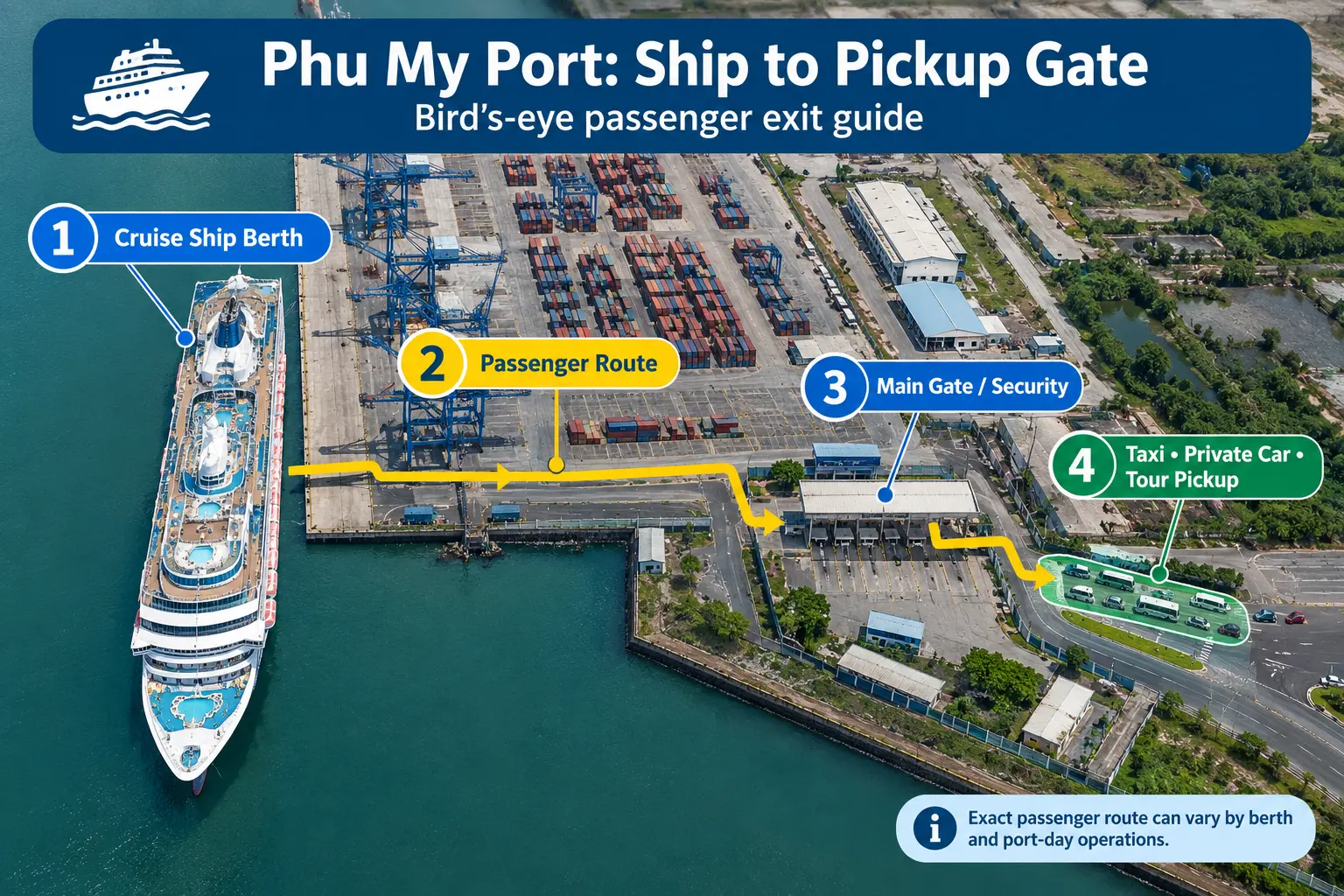
To leave the port area, you must ride an organized tour bus, take a port-provided shuttle to the main gate, or step directly into a pre-arranged private vehicle.
Arrival at Phu My Port: What to Expect Onboard
Disembarkation at Phu My requires extra attention to timing and port regulations.
The Port Permit Fee Reality
If you book an independent private tour or car, your arrangement depends heavily on pickup placement:
- Shipside Pickup (Pier Pickup): To allow an outside vehicle inside the working dock right next to your gangway, local authorities charge a port permit fee (typically $20–$25 USD per passenger). Your driver must submit your passport details and ship information at least 3–5 days prior.
- Gate Pickup: To avoid this fee, you can take the free port shuttle (or walk 10–15 minutes if permitted by terminal security) from the gangway to the main outer port security gate to meet your driver.
Cash & Connectivity
- Local Currency: Taxis and small vendors around the port gate or local markets rarely accept credit cards. Keep 500,000–1,000,000 VND (roughly $20–$40 USD) in cash for small purchases, local snacks, or tolls.
- Mobile Data: Port Wi-Fi is spotty or non-existent at container terminals. Purchasing an e-SIM or local SIM card before docking ensures you can contact your driver via WhatsApp or Zalo.

Phu My Port Transportation Options
Choosing the right transport balance between cost, comfort, and schedule safety is critical.
| Transport Option | Best For | Pros | Cons & Risks |
| Cruise Line Excursion | First-timers & cautious travelers | Guaranteed return to ship; zero logistical stress. | Expensive; fixed itinerary; large groups (30–40 people). |
| Pre-Arranged Private Car | Couples, families, & small groups | Direct door-to-door transit; full schedule control; personalized pace. | Must be booked days in advance; pier access fee applies for shipside pickup. |
| Cruise Line Shuttle Bus | Independent travelers heading to HCMC | Cost-effective drop-off in central District 1. | Strict departure/return schedules; limited seats; no guided commentary. |
| Port Gate Taxi | Short trips to nearby Vung Tau | Available on arrival at outer port gates. | Fare negotiation required; language barriers; rare availability for full-day return trips. |
Destination Choice: Ho Chi Minh City vs. Vung Tau
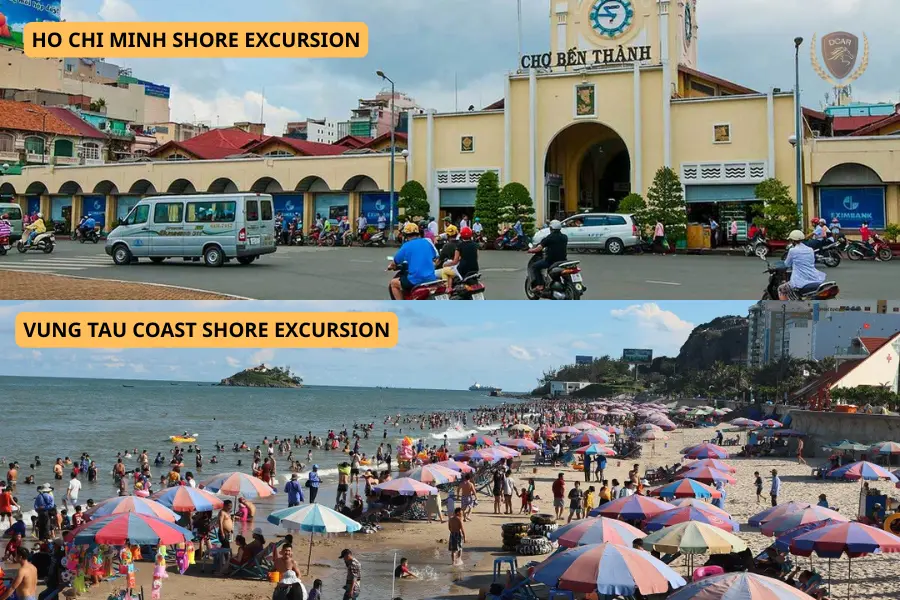
Your two primary excursion directions offer completely different experiences. While Ho Chi Minh City (or Saigon) offers urban energy with war history, French colonial architecture, and shopping hubs, Vung Tau is better for those who love the ocean vibes with fresh seafood and relaxed pace.
Check out details about each place so you can decide which one fits your expected shore excursion:
Option A: Ho Chi Minh City (Saigon)
- Travel Time: 1.5 to 2 hours each way via Highway 51 and the CT01 HCMC–Long Thanh–Dau Giay Expressway. (Allow 2.5 hours for the afternoon return journey due to urban bottlenecks near District 2 and An Phu intersection).
- Highlights: Reunification Palace, War Remnants Museum, Notre-Dame Cathedral Basket, Central Post Office, Ben Thanh Market.
- Best Choice If: You have a long port call (10–12+ hours) and want to experience Vietnam’s economic and historical heartland.
Interested in a Ho Chi Minh shore excursion? You can book a Phu My Port to Saigon Private Car for door-to-door visits with a local driver.
Option B: Vung Tau Coastal City
- Travel Time: 45 to 60 minutes each way via Highway 51 southbound.
- Highlights: Christ the King Statue (mountaintop viewpoint), Villa Blanche (Bach Dinh), Nirvana Pagoda, Back Beach promenade, local seafood restaurants.
- Best Choice If: Your ship stays in port for less than 8 hours, or you prefer a shorter transit time with a relaxed, coastal atmosphere.
Prefer a Vung Tau shore excursion from Phu My Port over Saigon? Custom a Phu My Port to Vung Tau Tour with local experts.
Realistic Ho Chi Minh City Day Itinerary
Attempting to see everything in Saigon during a 6-hour window leads to exhaustion. Focus on a tight geographical cluster in District 1:
- Morning Transit (08:00 – 09:30): Depart Phu My via Expressway CT01 directly to District 1.
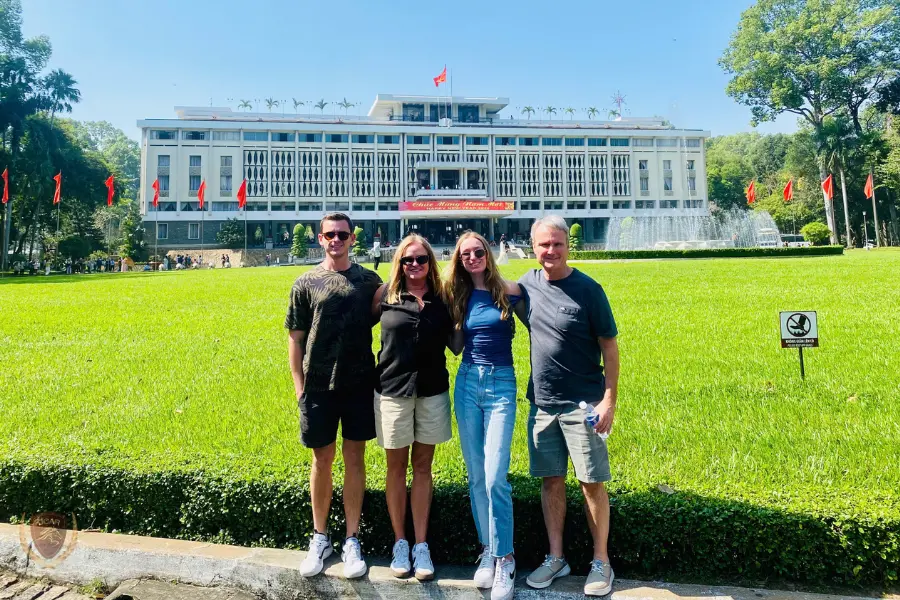
- Colonial Heart & History (09:30 – 11:30): Visit the Central Post Office and view the neighboring Notre-Dame Cathedral. Walk 5 minutes to the Reunification Palace for a guided historical walk.
- Local Flavor & Lunch (11:30 – 13:00): Enjoy a traditional meal of Phở or Bún Chả in a quiet courtyard setting, followed by an authentic iced egg coffee near the Post Office.
- War Heritage or Cultural Shopping (13:00 – 14:15): Tour the War Remnants Museum for deep historical context, or explore the covered aisles of Ben Thanh Market for handicrafts and tea.
- Return Departure (14:30 Sharp): Begin the return journey to Phu My, building in a safety buffer for afternoon traffic.
Join a private Phu My Port to Saigon Tour to customize your shore excursions and discover your fav Saigon attractions.

Ship Return Safety: Protecting Your All-Aboard Time
The journey back to Phu My from Saigon crosses several major commuter bottlenecks. Missing all-aboard time means arranging your own transport to the next port.
⭐ A realistic returning time sample:
- 14:30: Departure from HCMC
- 15:00: Expressway CT01
- 16:00: Highway 51 Bottleneck
- 16:45: Port Gate & Security
- 17:00: Shipboard
Golden Buffer Rules:
- The 2-Hour Buffer: Always plan to arrive back at the port entrance at least 90 to 120 minutes before your official all-aboard time.
- Peak Hour Warning: Heavy container truck traffic on Highway 51 spikes between 15:00 and 17:00.
- Driver Communication: Ensure your private driver understands that return timing is fixed. Establish a non-negotiable departure time from Saigon before your day begins.
FAQs
Which specific container terminal will my cruise ship dock at?
Most medium-to-large cruise ships dock at SP-PSA Terminal, TCMT (Tan Cuan–Cai Mep), or PTSC Phu My Port. Your ship’s daily newsletter distributed the night before arrival will specify the exact terminal name and berth number.
Can I use Grab or ride-hailing apps directly from Phu My Port?
Grab operates in the Phu My urban area, but driver drivers are not permitted to enter the security gates of industrial container terminals. To use Grab, you must take an internal port shuttle to the outer gate security checkpoint. Furthermore, getting a return Grab ride from Saigon back to Phu My in the late afternoon can be difficult, as drivers often decline long-distance highway routes back to Ba Ria–Vung Tau.
Are there ATMs or currency exchange booths inside the port terminal?
No. Container terminals at Phu My do not have passenger terminal infrastructure, ATMs, or official currency exchange desks. Exchange currency onboard your ship or use an ATM once you arrive in downtown Ho Chi Minh City or Vung Tau.
What should I wear when visiting religious and historical sites in HCMC or Vung Tau?
When visiting places like the War Remnants Museum, Reunification Palace, or local temples (such as Vung Tau’s Nirvana Pagoda), dress modestly. Shoulders and knees must be covered. Lightweight, breathable linen or moisture-wicking fabrics are ideal for Vietnam’s tropical heat.
Final Thoughts
Phu My Port is a commercial gateway, but with early planning, clear driver instructions, and realistic expectations, it opens the door to one of Southeast Asia’s most dynamic regions. Prioritize one well-structured destination, secure your transport in advance, and protect your return buffer so you can enjoy every minute on the ground.
Continue your itinerary setup with our detailed Chan May Port guide for reaching Hue and Da Nang.
Thank you for reading our blog on Phu My Port guide. Vietnam Limousine wishes you a wonderful, safe voyage through Vietnam!