

Introduction
Choosing between train vs limousine in Vietnam comes down to balancing route speed, door-to-door convenience, overnight travel preferences, and scenic value. Neither option is universally better across the country. Trains excel on scenic corridors and overnight journeys with lie-flat space, while VIP limousine vans dominate medium-distance expressway routes where direct hotel pickup eliminates intermediate station transfers.
This guide breaks down costs, comfort levels, travel times, luggage policies, and top routes, including Hanoi to Sapa, Hanoi to Ninh Binh, and Hue to Da Nang. So, you can pick the right transport for your Vietnam itinerary.
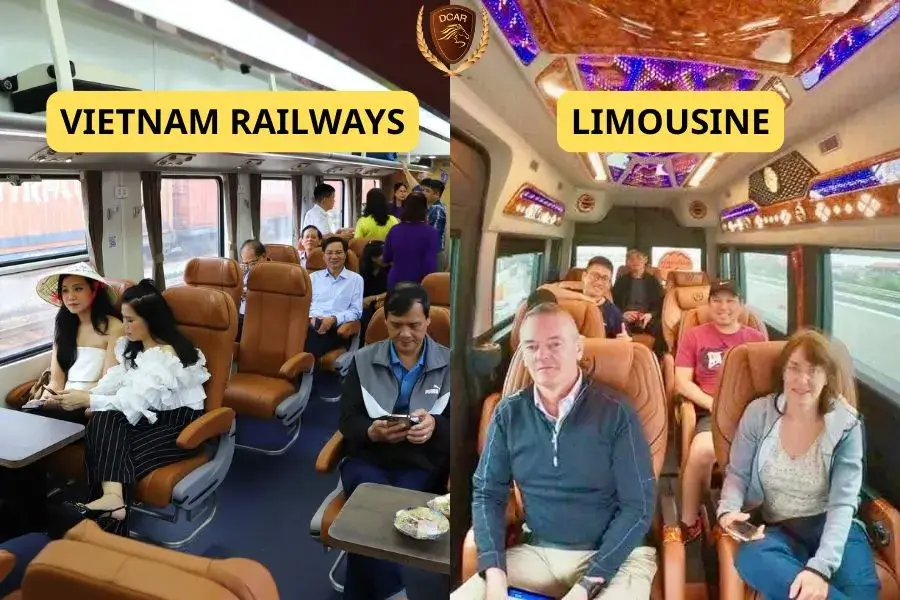
Quick Comparison: Vietnam Train vs Limousine Van
A quick summary is that taking a train or limousine in Vietnam depends mostly on your distance and destination.
Trains operated by Vietnam Railways offer lie-flat sleeper cabins, toilets, and scenic coastal routes (like the Hai Van Pass). Thus, they’re ideal for overnight trips and long distances.
On the other hand, limousine vans (typically modified 9-seat Ford Transits or Hyundai Solatis) use expressways to offer faster, door-to-door daytime transfers on medium-distance routes like Hanoi to Sapa or Ninh Binh.
Here is the detailed side-by-side comparison:
| Travel Factor | Vietnam Train (Vietnam Railways & Private Carriages) | Limousine Van (VIP Minibus / DCar) |
| Best For | Scenic coastal journeys, overnight travel, long distances | Medium-distance expressway routes, door-to-door transfers |
| Comfort Type | Soft seats, 4-berth/6-berth sleeper cabins, luxury carriages | Leather reclining captain chairs, AC, USB ports, Wi-Fi |
| Speed & Directness | Fixed rails; may require station transfers (e.g., Lao Cai for Sapa) | Uses expressways; direct hotel pickup/drop-off in central areas |
| Luggage Capacity | Generous; no strict weight enforcement | Restricted (usually 1 medium suitcase + 1 personal item per seat) |
| Scenery Experience | Panoramic views away from main highways (e.g., Hai Van Pass) | Expressway/highway views; occasional mountain pass routes |
| Overnight Capability | High (4-berth soft sleepers allow flat sleeping) | Moderate (Standard vans are daytime-only; cabin buses run night routes) |
| Booking Channels | Official site (dsvn.vn), stations, aggregators (12Go Asia, Baolau) | Operator direct, hotel desks, aggregators (12Go Asia, Vexere) |
What Is a Limousine Bus in Vietnam?
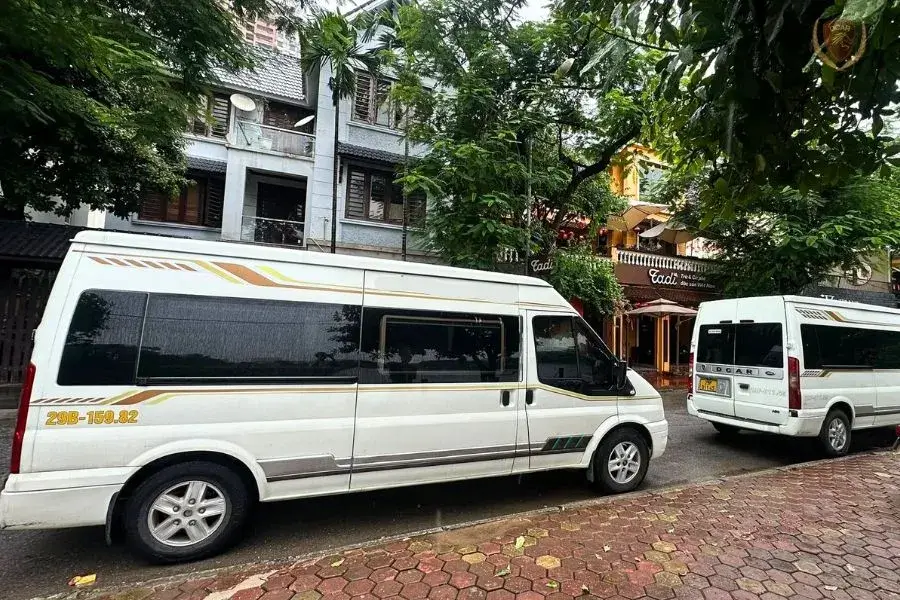
In the Vietnamese transport market, the term “limousine” does not refer to a stretched stretch limousine. Instead, it typically describes a modified passenger van or minibus, most commonly a Ford Transit or Hyundai Solati customized by coachbuilders like DCar.
Vehicle Types
Some limousine types you will usually encounter in Vietnam are:
- 9-Seater VIP Limousine Van: Standard 16-seater vans retrofitted with 9 plush, leather reclining captain chairs (often with massage features, USB charging ports, and personal reading lights). These are the standard for routes like Hanoi to Sapa or Hanoi to Ninh Binh.
- 11 to 18-Seater Executive Limousine: Larger minibuses built on Hyundai Solati or Fuso Rosa frames, offering spacious aisle seats for medium-group transfers.
- 20 to 22-Cabin Sleeper Bus (VIP Limousine Bus): Full-sized double-decker coaches fitted with individual private sleeping pods (“cabin buses”). These are frequently marketed under the “limousine” banner for long-distance overnight road travel.

Pickup Realities
Many limousine operators advertise hotel pickup. In Hanoi, this usually applies to hotels within the Old Quarter. In smaller towns like Sapa or Tam Coc, drop-offs are generally direct.
However, in cities with narrow lanes (such as Hanoi’s deep alleys or ancient streets), large vans cannot enter. In these cases, operators arrange shuttle transfers or direct you to a centralized meeting point nearby.
Vietnam Train Overview
The national rail network, managed by Vietnam Railways, stretches along the backbone of the country on a 1,000 mm meter-gauge track. The flagship route is the North-South Railway, served by the Reunification Express.
Class Breakdown
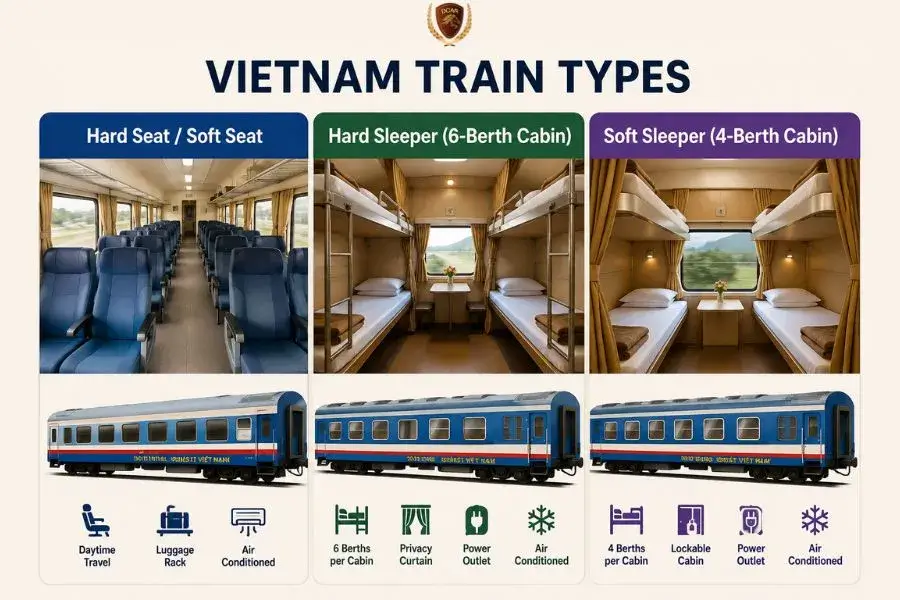
- Hard Seat / Soft Seat: Air-conditioned coach seating. Soft seats are suitable for short daytime journeys (e.g., Hanoi to Ninh Binh or Hue to Da Nang), but lack the space needed for comfortable overnight travel.
- Hard Sleeper (6-Berth Cabin): Three tiers of bunks per side. The bottom bunk offers the most headroom, while the top bunk sits close to the ceiling.
- Soft Sleeper (4-Berth Cabin): Two tiers of bunks per side with thicker mattresses, lockable doors, and personal reading lights. This is the standard choice for overnight journeys.
Private Tourist Carriages
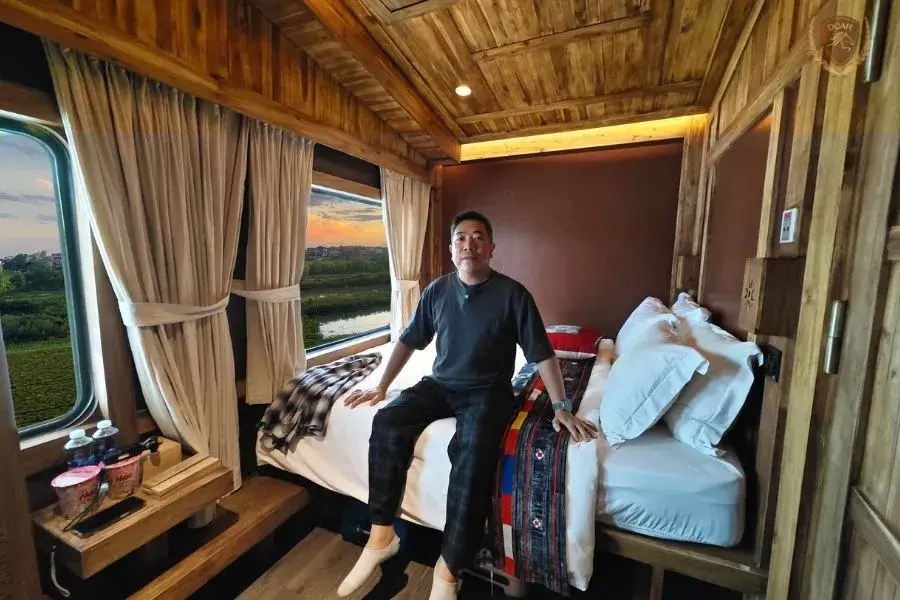
On high-demand routes, private tourism companies attach custom luxury carriages to official Vietnam Railways locomotives.
- Hanoi to Sapa (Lao Cai Station): Carriages operated by Chapa Express, Vic Sapa Train, Laman Express, and Sapaly offer wood-paneled 2-berth or 4-berth cabins with upgraded bedding and complimentary snacks.
- Hanoi to Hue / Da Nang: Carriages like Lotus Train and Laman Express offer higher-end soft sleeper options on overnight rail lines.
Real Differences Between Train vs Limousine
So what is really different about train and limousine travel? Consider the top 5 key comparison factors below to find the best for you.
Price and Value
Comparing train vs limousine price in Vietnam depends on seat class and private carriage selection:
- Budget Travelers: A standard soft seat on a Vietnam Railways train or a seat in a shared 9-seater limousine van usually costs around $8 to $15 USD for short-to-medium distances (e.g., Hanoi to Ninh Binh).
- Mid-Range / Sleeper Routes: A 4-berth soft sleeper train ticket from Hanoi to Sapa costs roughly $18 to $25 USD on standard state-run carriages, while a limousine van on the direct expressway costs $12 to $20 USD.
- Premium Carriages: Private train carriages (like Chapa Express) range from $35 to $70+ USD per bed.
When calculating costs, factor in transit extras: taking a train often requires taxi fares from your hotel to the railway station (e.g., Hanoi Railway Station or Saigon Railway Station) and from the arrival station to your final stay. Limousines often bundle these transfers into the main fare.
Travel Time and Expressway Efficiency
Road infrastructure upgrades, especially the Noi Bai–Lao Cai Expressway (CT05) and various coastal expressways, have made limousine travel significantly faster on specific corridors:
- Hanoi to Sapa: A direct limousine van takes approximately 5.5 to 6.5 hours door-to-door via the expressway. The train from Hanoi to Lao Cai Station takes around 8 hours, followed by a 1-hour mountain bus or shuttle transfer up to Sapa town (total travel time: 9–10 hours).
- Hanoi to Ninh Binh: A limousine van reaches Tam Coc or Trang An directly in 1.5 to 2 hours. The train takes about 2.2 hours to reach Ninh Binh Station, requiring a short taxi ride to reach the main tourist sites.
For long-distance routes (e.g., Hanoi to Hue or Da Nang), trains take 13 to 16 hours. Here, the choice is between an overnight train sleeper or a domestic flight, as long-distance daytime van journeys can be tiring.
Comfort, Space, and Motion Sickness
- Legroom and Movement: Trains provide significantly more spatial freedom. You can stand up, walk between carriages, use onboard restrooms, or visit the dining car. This makes rail travel better for travelers prone to stiffness or back pain.
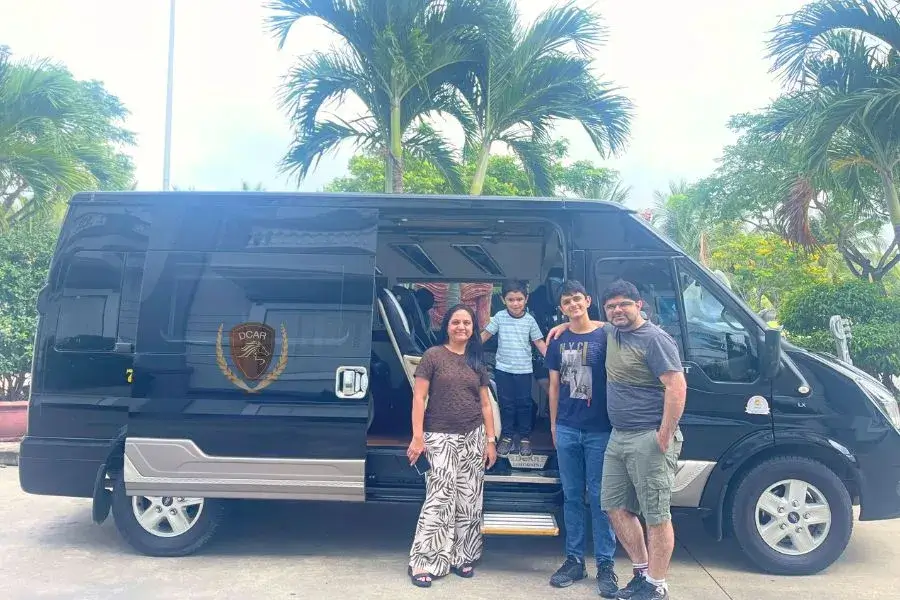
- Seating Comfort: A DCar limousine captain chair is plush and supportive for 2 to 5 hours of daytime sitting. However, space is confined inside a 9-seater cabin.
- Motion Sickness: Trains run on fixed tracks with a gentle side-to-side sway, making them easier on passengers sensitive to motion sickness. Limousine vans on winding mountain roads (such as the final ascent to Sapa) can be challenging for those prone to carsickness.
Luggage Allowances
- Train Travel: Vietnam Railways has relaxed luggage practices for typical travelers. Bags stay inside your sleeper cabin (under the bottom bunk or on luggage racks) or above your seat row.
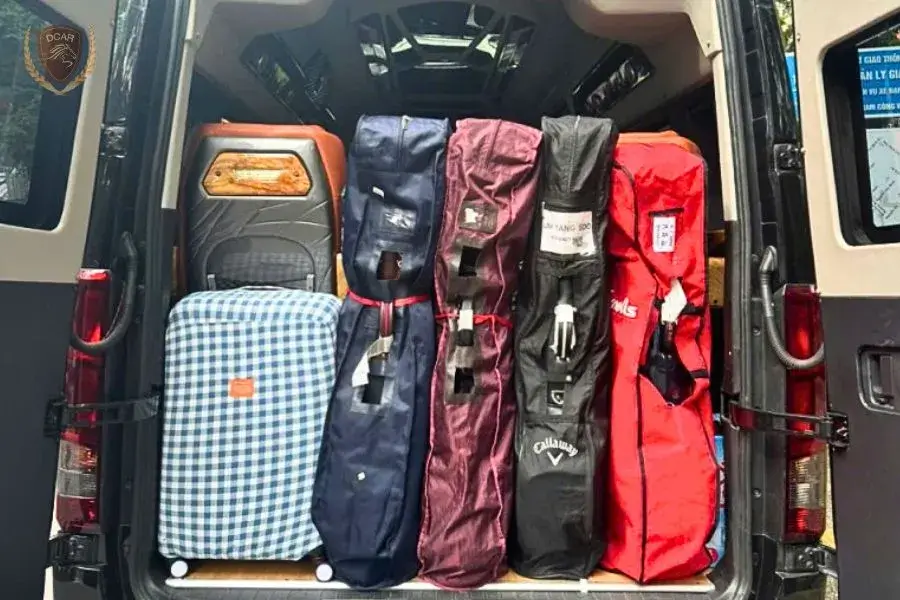
- Limousine Vans: Due to limited rear trunk space in modified 9-seat vans, operators usually enforce a limit of one medium suitcase (up to 20kg) plus one small personal item per passenger. If you carry multiple large hard-shell suitcases or bulky equipment, notify the operator in advance or book an additional seat space.
Safety Standards
- Rail Safety: Trains run on dedicated tracks managed by Vietnam Railways, isolated from highway traffic. They are among the safest modes of land transportation in the country.
- Road Safety: Expressways have improved road safety significantly over rural highways. To ensure a safe limousine trip, choose established, licensed operators (e.g., EcoSapa, GreenLion, Grouptour, Toan Thang) with professional drivers rather than unverified street operators.
Train vs Limousine Choice by Route
Because highway infrastructure, rail station access, and distance vary widely across Vietnam, the ideal choice between train and limousine changes from one corridor to the next.
The following route-by-route analysis breaks down which transport mode makes the most practical sense for each popular leg of your journey.
Hanoi to Sapa
- Best Choice for Convenience: Limousine Van
- Best Choice for Atmosphere: Overnight Sleeper Train
- The Local Verdict: If you want to save daytime hours and prefer sleeping lying flat, take the overnight sleeper train from Hanoi Railway Station to Lao Cai, then take a connecting shuttle up the mountain. If you want to travel directly during the day without changing vehicles, take a VIP limousine van via the expressway.
For a deeper breakdown of this corridor, check out our guide on the best way to travel from Hanoi to Sapa. You can also refer to our Hanoi to Sapa limousine service.
Hanoi to Ninh Binh
- Best Choice: Limousine Van
- The Local Verdict: Ninh Binh’s primary tourist areas (Tam Coc, Trang An, Hang Mua) sit outside Ninh Binh city center. Limousine vans drop you directly at your resort or homestay in Tam Coc in under 2 hours. Taking the train drops you at Ninh Binh Railway Station, requiring an extra taxi to reach the countryside.
See the private transfer from Hanoi to Ninh Binh by limousine for both direct and sightseeing car trips.
Hue to Da Nang
- Best Choice: Train
- The Local Verdict: This is one of Southeast Asia’s most scenic rail sections. The train winds through the Hai Van Pass, offering elevated ocean views over the coastline that highway tunnels bypass. Take the daytime soft-seat train for the scenery.
- Highlight: A special railway route called “Heritage Train” from Hue to Da Nang Train Station and vice versa was launched in 2024. It takes passengers along one of Vietnam’s most beautiful coastal routes, featuring Lang Co Bay and the Hai Van Pass. It costs around $12 and takes 3-3.5 hours.
If you prefer stopping at coastal landmarks along the coast, consider a private transfer from Hue to Da Nang by limousine.
Hanoi to Hue / Da Nang
- Best Choice: Overnight Train (or Domestic Flight)
- The Local Verdict: Due to the 600–800 km distance, sitting in a limousine van for 13 to 16 hours is tiring. Book an overnight 4-berth soft sleeper train (such as the SE1 or SE3 express) to save on a hotel night, or opt for a 1.2-hour domestic flight if short on time.
Ho Chi Minh City to Nha Trang
- Best Choice: Overnight Sleeper Train
- The Local Verdict: Vietnam Railways runs daily sleeper services (like the SNT2 train) departing Saigon Railway Station in the evening and arriving at Nha Trang Station early the next morning. Limousine vans operate via the Phan Thiet–Vinh Hao expressway during the day, but the overnight train remains the preferred land option for comfort.
How to Book Tickets Safely in Vietnam
Official Train Booking
Book directly through the official Vietnam Railways portal (dsvn.vn) to secure official prices without markup. Note that international credit cards can occasionally encounter gateway errors on state portals. If so, reliable travel aggregators like 12Go Asia or Baolau offer seamless international booking for a minor service fee.
Limousine Van Booking
You can reserve seats through online booking aggregators, through your hotel desk, or directly with operator apps (such as Vexere). Always verify whether the fare includes hotel pickup or specifies a fixed pickup point.
When to Book
Book sleeper trains and weekend limousine vans at least 3 to 7 days in advance. During peak Vietnamese holidays, especially Tet (Lunar New Year) in January/February and National Day (September 2), book rail and road tickets 3 to 4 weeks early.

FAQs
Where do I store my luggage on a Vietnam Railways sleeper train?
In 4-berth and 6-berth sleeper cabins, luggage is stored in the large open space under the bottom bunks or on a raised overhead luggage shelf above the door frame inside your cabin. Hard-shell suitcases up to 28 inches fit under the lower beds.
Are there private toilets inside Vietnamese train sleeper cabins?
No. Toilets on Vietnam Railways trains are shared facilities located at the end of each rail carriage. Western-style flush toilets and traditional squat toilets are available depending on the carriage generation. Standard limousine vans do not have onboard toilets, but drivers make scheduled rest-stop breaks every 1.5 to 2 hours at roadside highway stations.
Do limousine vans pick up directly at Hanoi’s Noi Bai International Airport (HAN)?
Yes, several licensed limousine operators (such as EcoSapa or GreenLion) offer pick-up options directly from the domestic and international arrival terminals at Noi Bai Airport for routes heading north to Sapa, Ninh Binh, or Halong Bay. This allows you to bypass traveling into central Hanoi first.
Is Wi-Fi reliable on trains and limousine vans in Vietnam?
Limousine vans routinely advertise free onboard Wi-Fi, but connection speeds fluctuate depending on cellular coverage along the expressway. Trains do not reliably provide onboard public Wi-Fi. For continuous internet access across both modes, buy a local 4G/5G eSIM (from providers like Viettel or Vinaphone) before departure.
Final Verdict
To choose the best transportation option for your Vietnam trip, match the mode of transport to the specifics of each leg:
- Choose the train for long overnight trips (Hanoi to Hue/Da Nang), scenic coastal segments (Hue to Da Nang over the Hai Van Pass), and journeys where having room to stretch out matters.
- Choose a limousine van for medium-distance expressway travel (Hanoi to Sapa, Hanoi to Ninh Binh) where direct door-to-door drop-offs save time and remove station transfer steps.
- Mix and match modes: For a balanced trip across Vietnam, combine a direct limousine van from Hanoi to Sapa, an overnight sleeper train south to central Vietnam, and domestic flights or private cars for regional excursions.
Thanks for reading our comparison blog about the train vs limousine in Vietnam. Our team at Vietnam Limousine wishes you smooth transfers and memorable views along the way!